
How to Reapply After Qatar Visa Rejection: A Step-by-Step Guide
Seeing “Rejected” next to your Qatar visa application is a gut-punch. Maybe you’d already told your family you were coming home with good news, or your new employer is waiting on you to join. The good news — and it really is good news — is that a rejected Qatar visa is rarely the end of the road. Most rejections come down to a fixable problem, and once you know what went wrong, reapplying is usually straightforward.
Before anything else, though, it’s worth doing a proper MOI Qatar visa check to confirm the status is actually “Rejected” and not something else entirely, like “Under Process” or “Not Found” — each of those means something different and needs a different fix.
This guide walks you through exactly what to do next, in order, so you don’t waste another 2-3 weeks on a second rejection.

First, Don’t Reapply Yet — Confirm What Actually Happened
Before you touch a new application, take a breath and get the facts straight. A lot of applicants panic and resubmit the same paperwork immediately, hoping it’ll go through the second time. It almost never does, because the underlying issue is still there.
Step 1: Recheck your status on the official portal
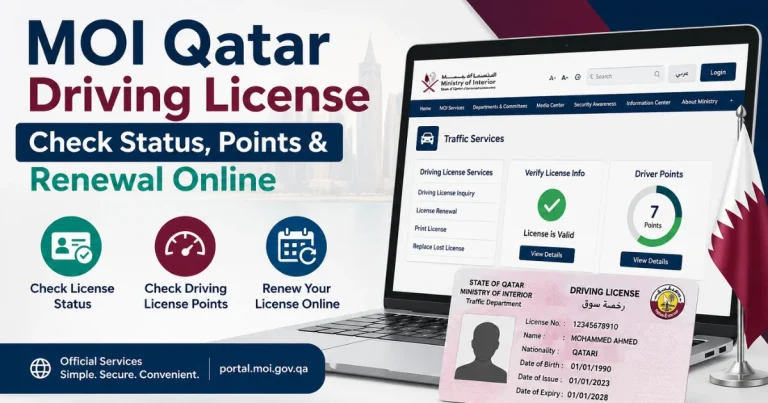
Log into the MOI Qatar portal (portal.moi.gov.qa) or the Metrash app and search using your passport or visa number. Make sure the status genuinely says Rejected — not “Under Process” or “Not Found,” which are different situations entirely and need different fixes. “Not Found” usually just means a typo in your search details, not an actual rejection.
Step 2: Find out the specific reason
Here’s the part most people skip, and it’s the one that matters most. The MOI portal itself usually won’t spell out why your visa was rejected — it just shows the status. To get the actual reason, someone needs to ask on your behalf:
- If it’s a work or family visa, your sponsor or employer in Qatar can request the rejection reason directly from MOI or through their Metrash employer account.
- If you applied through a typing center or visa agent, call them. They submitted your file and can usually pull up the specific rejection note.
- If you went through the Qatar Visa Center (QVC) — common for applicants from Pakistan, India, Bangladesh, Nepal, Sri Lanka, and the Philippines — check your QVC tracking status too. Sometimes the issue traces back to an incomplete step there (a failed medical test, unfinished biometrics) rather than MOI itself.
Don’t skip this step. Reapplying without knowing the exact cause is the single biggest reason people get rejected a second time.
Common Reasons Behind the Rejection (So You Know What to Look For)
While you’re waiting to hear back on the specific reason, it helps to know the usual suspects:
- Document problems — a missing NOC, an unclear passport scan, or a photo that doesn’t meet Qatar’s size and background rules
- Passport validity — your passport needs at least 6 months of validity left from your entry date
- Financial proof issues — for visit visas, an unstamped bank statement or low closing balance is a classic red flag
- Data mismatch — even a swapped first/last name or a wrong passport digit can trigger an automatic rejection
- Sponsor-side problems — an inactive trade license, a blocked establishment card, or sponsor QID issues can sink an otherwise perfect application
- Health or medical flags — missing health insurance documentation or a failed medical test for long-term stays
- Prior violations — a past overstay or sponsorship violation makes future approvals harder, though not impossible
If your sponsor or agent comes back with one of these, you’re actually in a good position — these are all fixable.
Step-by-Step: How to Reapply the Right Way
Once you know the reason, here’s the order to follow.
1. Fix the exact issue — not just “the application”
Whatever caused the rejection, address that specific thing. If it was a bank statement, get a fresh, properly stamped one showing an adequate balance. If it was a document, get a clean, legible scan in the correct format. If it was a data mismatch, double- and triple-check every field against your passport before resubmitting — name order, date of birth, and passport number especially.
2. Wait for any pending issue to clear (if relevant)
If the rejection was tied to something like a sponsor’s blocked trade license or an unresolved medical result, don’t resubmit until that’s actually resolved. Reapplying while the root cause is still active just gets you the same result.
3. Submit a fresh application — don’t try to “edit” the old one
In most cases, there’s no formal appeal process for Qatar visas. The standard path is simply to submit a new, corrected application through the same channel you used before (employer/sponsor, typing center, or QVC, depending on your visa type). Think of it as starting clean rather than reopening the old file.
4. Make sure only one application is active at a time
This one trips people up. If your first application is still technically “in the system” or under review anywhere, don’t submit a second one in parallel. Duplicate or simultaneous applications for the same person are flagged automatically and often lead to another rejection — sometimes for both.
5. Loop in your sponsor or embassy for follow-up
For work and family visas, your sponsor in Qatar carries more weight with MOI than you do from abroad. Have them confirm the resubmission went through and follow up directly if the new application seems to be stuck. If you’re overseas and using QVC, their tracking system will show you exactly which stage you’re at.
6. Track the new application closely
Check the MOI portal or Metrash every few days rather than daily (status doesn’t usually update that fast) but don’t let it sit unchecked for weeks either. Most visit and work visa decisions show up within a few days to about two weeks of resubmission.
How Long Should You Wait Before Reapplying?
For most straightforward issues — documents, financial proof, a data typo — there’s generally no mandatory waiting period. Once the problem is genuinely fixed, you can resubmit right away.
The exception is if your rejection was linked to a ban, blacklist entry, or a serious violation. In that case, reapplying immediately usually won’t help, and you’ll want to get clarity from MOI (through your sponsor or a legal contact in Qatar) on whether — and when — a fresh application would even be considered.
Does One Rejection Hurt Your Future Chances?
Generally, no. A single rejection over something ordinary — a document gap, a financial proof issue, a data mismatch — doesn’t leave a lasting mark once it’s corrected. Thousands of applicants get approved on their second try every month.
What does raise your risk profile is a pattern: repeated rejections for the same unfixed issue, or a rejection tied to fraud, a ban, or a sponsorship violation. So the goal on reapplication isn’t just “submit again” — it’s “submit again, correctly, once.”
Quick Checklist Before You Hit Submit Again
- You know the specific reason for the rejection (not just “Rejected”)
- That exact issue has been corrected — documents, funds, data, or sponsor status
- Your previous application is fully closed out, not still pending anywhere
- All personal details match exactly across passport, form, and supporting documents
- Your sponsor, employer, or agent has confirmed the resubmission
- You have a way to track the new application (MOI portal, Metrash, or QVC)
Frequently Asked Questions
Can I reapply immediately after a Qatar visa rejection? Yes, in most cases — as long as the underlying issue has actually been fixed. There’s usually no mandatory cooling-off period unless the rejection involved a ban or blacklist.
Do I need to use the same sponsor or agent to reapply? Not necessarily, but it’s often easier. Your original sponsor or typing center already has your file history and can usually resubmit faster than starting completely fresh with someone new.
What if MOI won’t tell my sponsor the rejection reason? This happens occasionally. In that case, review your application against the common rejection causes above, fix anything that looks weak (documents, financials, data accuracy), and resubmit a cleaner application.
Will a second rejection permanently block me from getting a Qatar visa? Not automatically. What matters is why you keep getting rejected. Fixable, one-off issues rarely cause long-term problems. Repeated identical mistakes or serious violations are what actually damage future chances.
How do I know if my reapplication was successful? Check the MOI Qatar portal or Metrash app using your passport or new visa number. A status of “Approved” or “Ready to Print” confirms it went through.
The Bottom Line
A Qatar visa rejection feels final, but it usually isn’t. The applicants who get approved on their second attempt are the ones who stop, find out the real reason, fix that one thing properly, and then resubmit through the right channel — instead of resubmitting the same file and hoping. Get the reason, fix it, and check your status through official channels only.